A marine fuel release can become a pollution incident, a toxic exposure emergency and a disruption to port operations at the same time. As fuel choices change, the preparedness question becomes specific: can the people receiving the first report identify the hazards, establish a shared picture and obtain the capabilities that this release requires? An oil spill plan remains valuable, but its assumptions need to be tested against the actual fuel and operation.
The IMO research and development forum that concluded in Singapore on 22 September 2026 brought this issue into focus. Participants examined alternative fuel spill behaviour, modelling, response and post-spill actions, and highlighted the need to connect research with operational preparedness before major incidents occur.[1] For shipowners and ports, that means checking how fuel-specific knowledge reaches the people expected to act.
The fuel determines the pollution problem
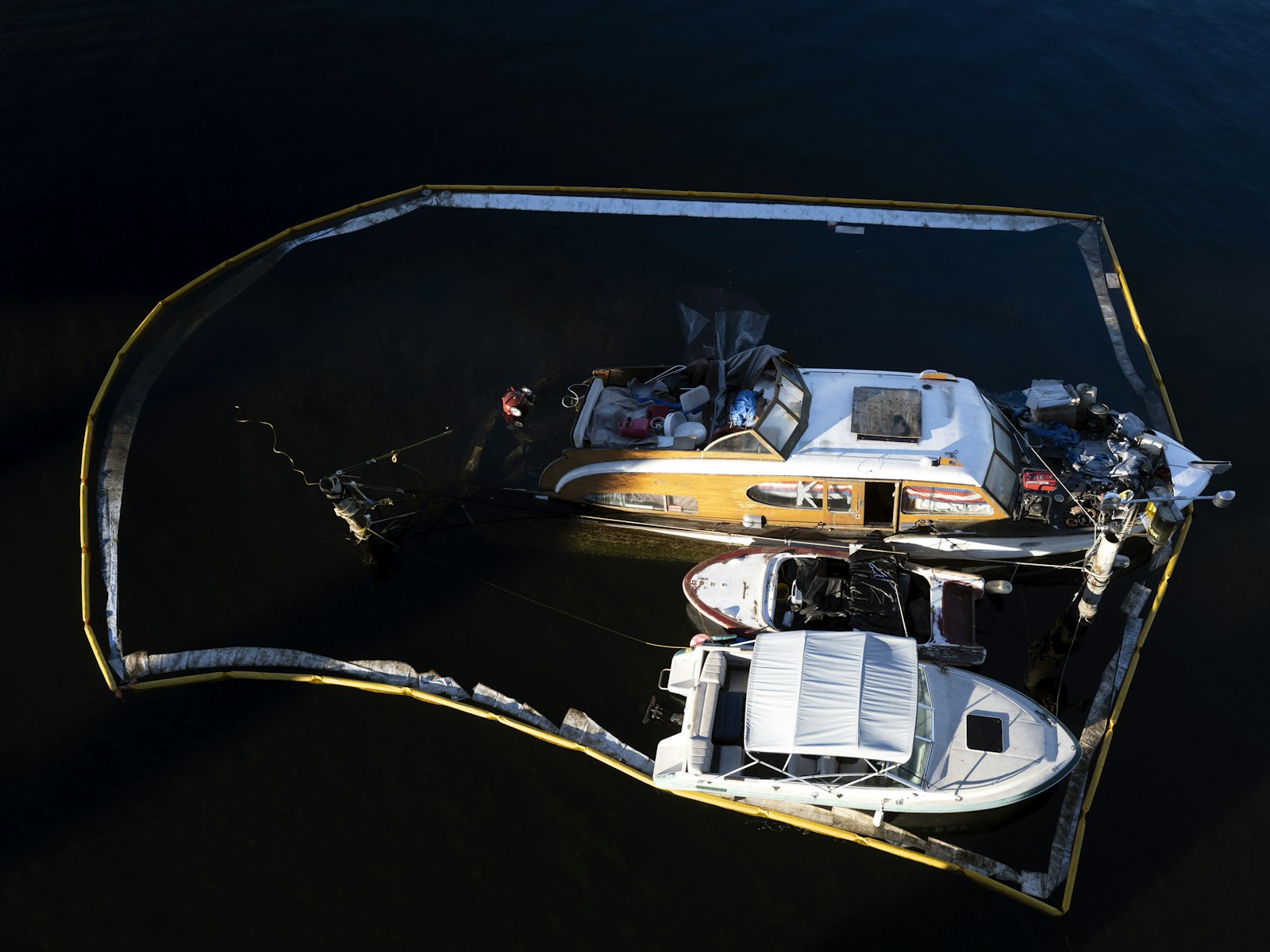
Conventional fuel oils already demand differentiated planning. Their persistence and behaviour depend on composition, quantity, weathering and environmental conditions. A familiar product name does not remove the need to understand the material involved.[2] Alternative fuels widen that range of behaviour and can change where the most urgent consequences arise.
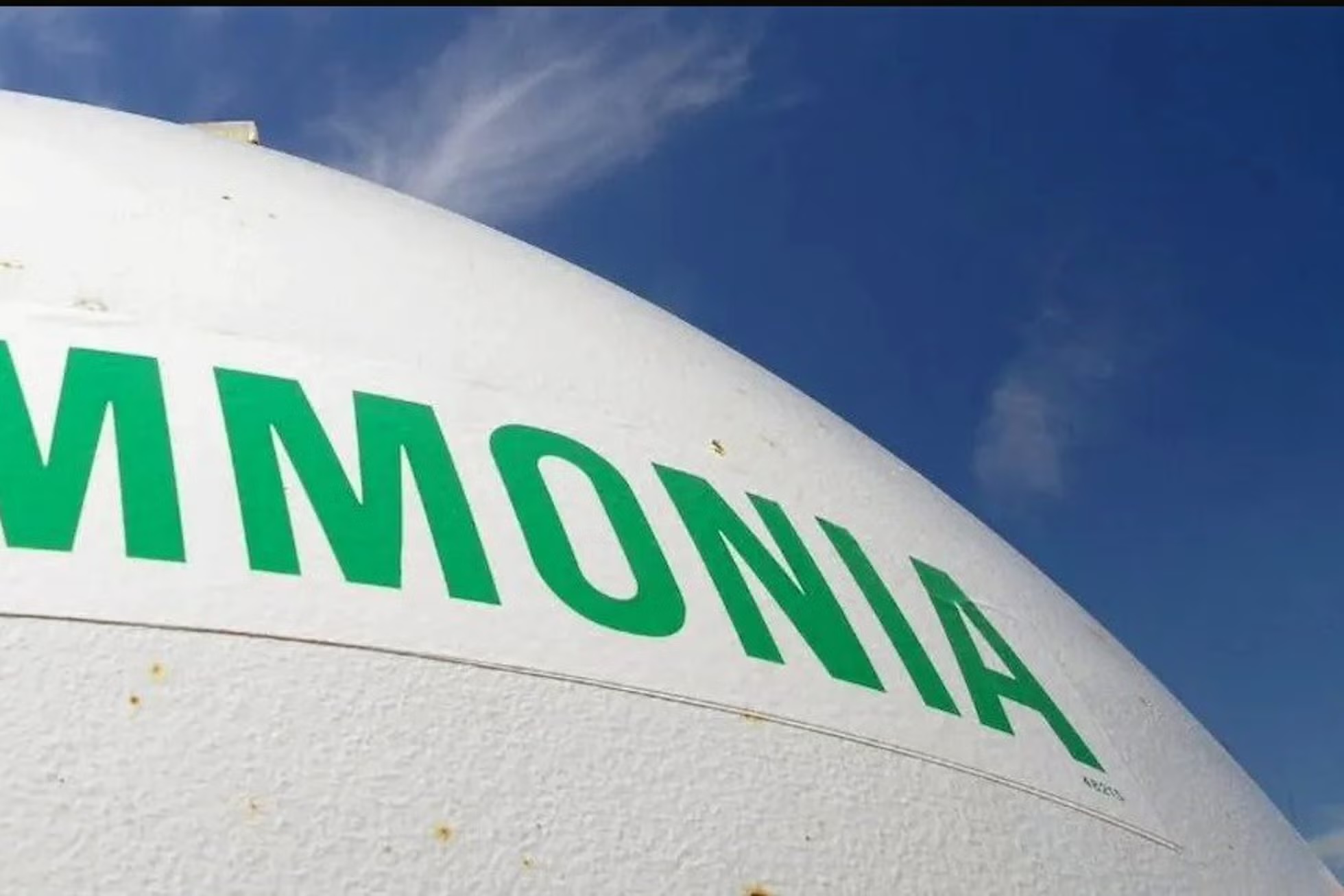
Methanol is fully miscible with water and presents flammability and human toxicity hazards. A dissolved release cannot be assessed simply by looking for an oil slick. Ammonia introduces a different combination of toxic exposure, corrosivity and aquatic effects, with consequences influenced by the release conditions and receiving environment.[3,4] Neither fuel should be treated as a conventional persistent oil merely because it is carried in a bunker tank.
Biofuels also need precise identification. Fatty acid methyl esters, or FAME, and hydrotreated vegetable oil, or HVO, have different properties, and their blends inherit characteristics from the conventional component. EMSA's study of biodiesel–bunker fuel blends supports adapting existing response arrangements, while identifying effects on detectability, weathering and recovery.[5] This is a reason to validate the existing capability for a particular blend, rather than assume that every alternative fuel requires an entirely new system.
Biodegradability does not establish that a spill is harmless. ITOPF identifies coating and smothering effects from biofuels and the possibility of oxygen depletion where degradation occurs in poorly mixed waters.[6] Environmental assessment therefore needs to consider what is exposed and under which conditions, as well as how long the fuel may persist.
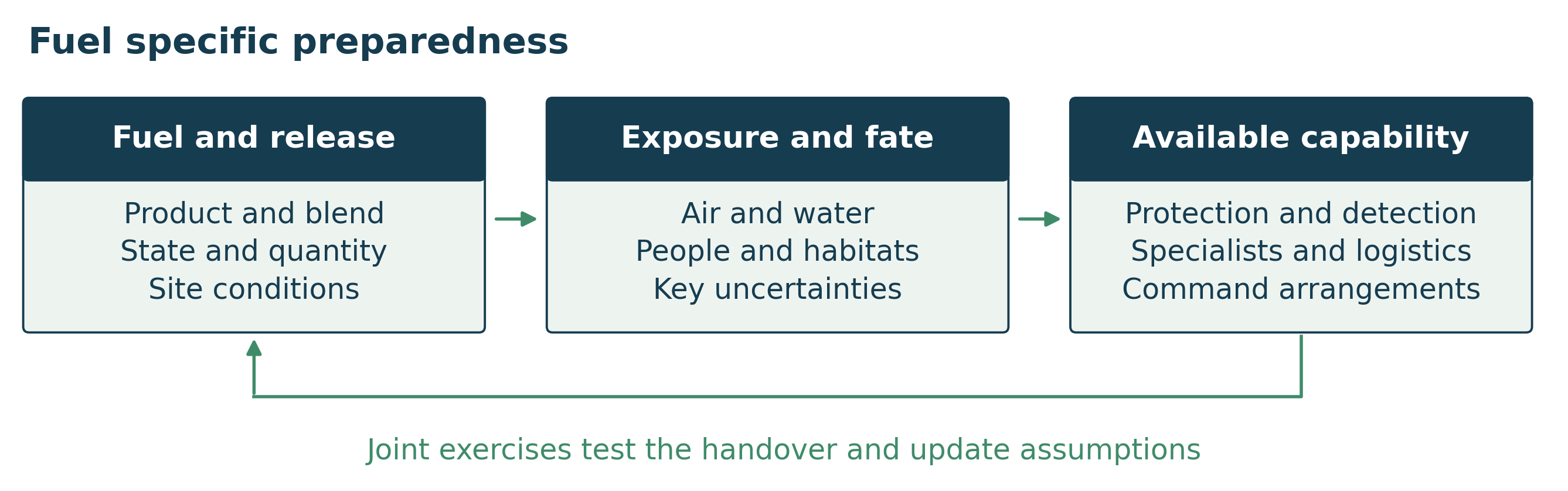 Figure 1 Fuel-specific preparedness connects the release scenario to a usable joint capability. Original ICORA MED conceptual schematic informed by references 4, 7, 8 and 9. The relationship is for planning, not an incident-response sequence.Source: ICORA MED
The first report supports a shared assessment
Preparedness should make the first notification useful without delaying it until every detail is known. The vessel and shore organisations need a common way to communicate the product and blend, safety data sheet, release location and time, estimated quantity and uncertainty, physical state, people affected, vessel condition and actions already taken. Weather, currents and nearby sensitive resources help specialists interpret what may happen next. ITOPF's notification guidance provides a practical basis for these information needs.[7]
The same information reaches the parties coordinating shipboard safety, port operations and environmental protection. Plans should establish decision authority and escalation arrangements before the incident, including how the ship's command works with the responsible shore authority. Separate organisations can each have a competent team yet still lose time if they use different assumptions about the release or wait for one another to request specialist support.[8]
A hypothetical bunkering incident tests the interface
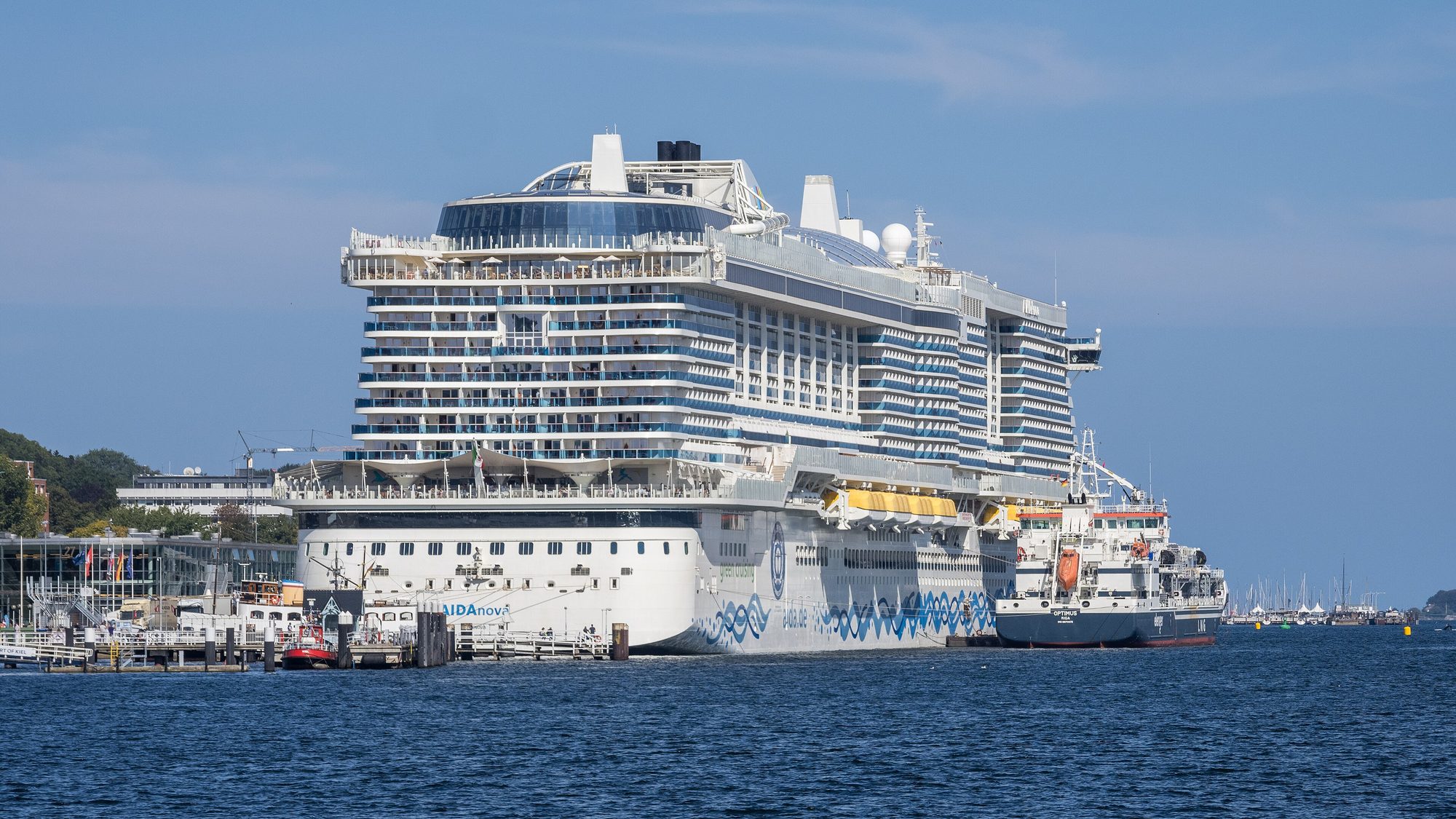
Consider a hypothetical methanol release during bunkering at a sheltered berth. The initial message reports a fuel spill, but the shore duty team receives neither the product identity nor the safety data sheet. Its first resource discussion centres on the oil recovery equipment normally used at that berth. The ship's team, meanwhile, is assessing a flammable and toxic liquid release. Both teams are responding, but their understanding of the incident has already diverged.
A useful exercise would examine how quickly that divergence is recognised and corrected. Can the receiving team obtain verified fuel information? Who integrates the ship's observations with shore monitoring and specialist advice? Can the port identify the responders qualified and equipped for the task? The exercise need not prescribe a universal tactic. Its purpose is to reveal whether the agreed arrangements produce a common assessment in time to support decisions.
Capability has to be demonstrated across ship and shore
Responder protection should follow the assessed hazards and intended task. Preparedness needs to establish access to suitable detection, chemically compatible protective equipment and trained personnel, alongside competent advice on their limitations. ITOPF's ammonia assessment explicitly connects the feasibility of response measures with specialist equipment, modelling and personnel availability.[4] A name on a contact list is insufficient evidence that those resources can reach the incident when needed.
Environmental monitoring should answer defined questions about exposure and impact. Depending on the fuel and scenario, these may concern airborne concentrations, dissolved contamination, water chemistry or affected habitats. Plans should identify who selects and interprets measurements, how sampling is organised and how findings inform subsequent decisions.[3,4,6] Uncertainty needs to remain visible, particularly where operational evidence for a large release is limited.
IMO describes contingency planning as a continuing process that adapts to changing risks.[9] A practical review should therefore connect each credible fuel-release scenario to a tested notification route, agreed command arrangements and demonstrably available capability. Joint exercises can expose gaps and assign responsibility for correcting them. When a fuel, berth or response provider changes, the relevant assumptions should be revisited. Preparedness is keeping pace when those connections work under realistic conditions.
This article discusses preparedness and assurance. It is not an emergency response procedure; incident actions follow applicable plans, competent direction and the conditions encountered.
Sources and further reading
Sources checked 15 October 2026
-
IMO. IMO R&D Forum advances global preparedness for alternative fuel pollution incidents22 September 2026. Forum scope and outcomes.
-
ITOPF. TIP 02 Fate of marine oil spills2014 web entry. Fuel properties, conditions and weathering determine fate and response suitability.
-
ITOPF. Fate Behaviour and Potential Damage and Liabilities Arising from a Spill of Methanol into the Marine Environment2024. Sections III–V, pp. 4–8. Water miscibility, human hazards, monitoring and uncertainty.
-
ITOPF. Fate Behaviour and Potential Damage and Liabilities Arising from a Spill of Ammonia into the Marine Environment2024. Sections III–V, pp. 3–8. Behaviour, toxicity, aquatic effects and specialist capability.
-
EMSA. Study on Biodiesel–Bunker Fuel Blends as Marine PollutantsFinal report dated 31 December 2025. Executive summary, pp. 11–13. Existing frameworks with blend-specific adaptations.
-
ITOPF. Fate Behaviour and Potential Damage and Liabilities Arising from a Spill of Biofuels into the Marine Environment2024. Sections II–V, pp. 2–7. FAME and HVO, physical impacts and oxygen availability.
-
ITOPF. Emergency Contact and Handbook 2024/25Notification information. The handbook, p. 1, also stresses that obtaining all information does not justify delaying the call. Handbook 2024/25
-
ITOPF. Contingency PlanningRisk assessment, leadership, decision responsibilities, mobilisation, training and exercises.
-
IMO. Preparing for Marine Pollution IncidentsContinuing adaptation, defined responsibilities, training and local through international capability.