Maritime history is not remembered only through technologies. It is also remembered through accidents.
Titanic became more than a shipwreck. It helped catalyse the first SOLAS Convention. Decades later, Torrey Canyon became a turning point in the international response to ship-source pollution and contributed to the regulatory path that produced MARPOL. The Erika broke up off Brittany in 1999, and the response reached well beyond the casualty itself: three successive European legislative packages followed, and the European Maritime Safety Agency was established in their course.
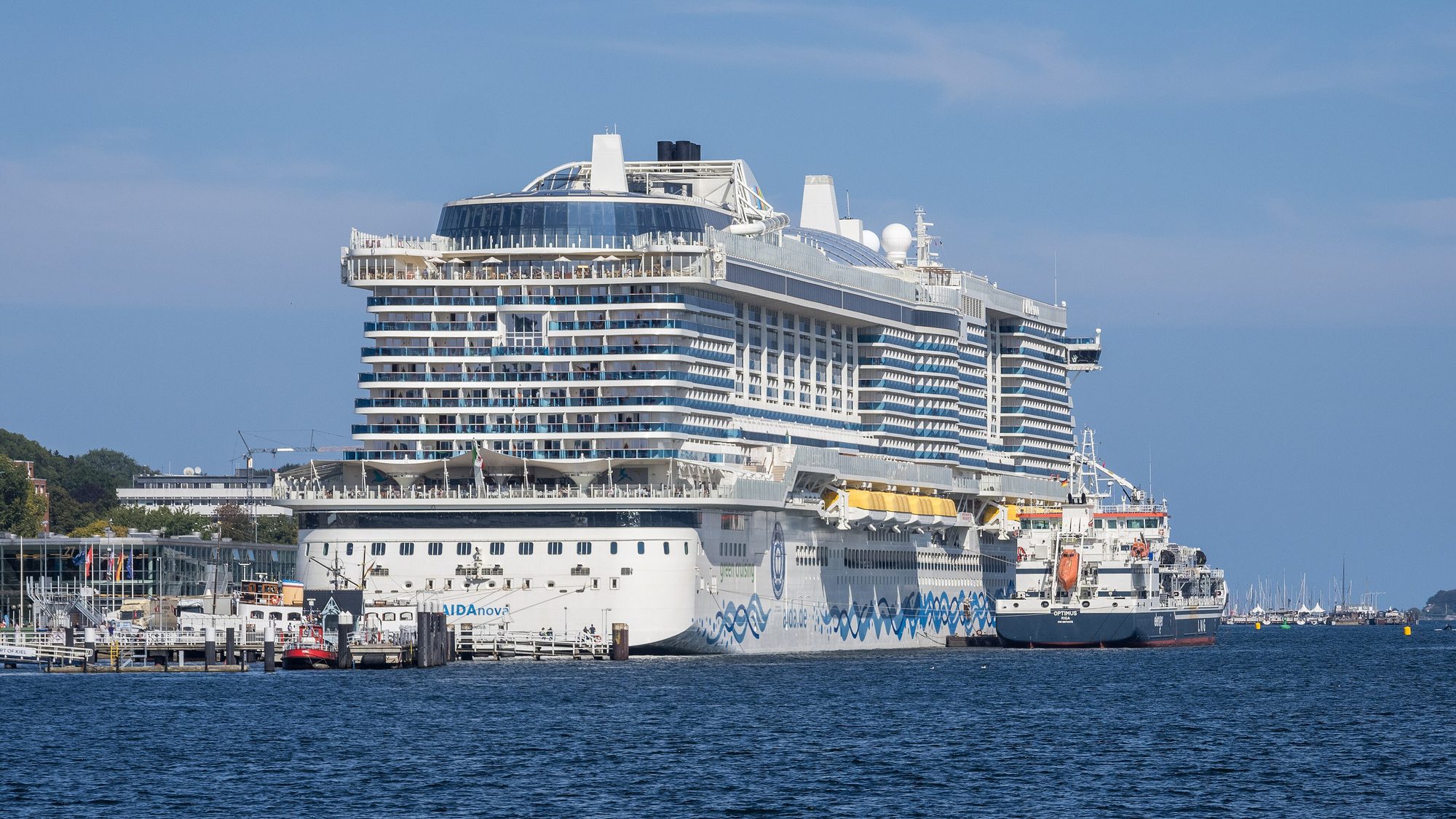
More recently, the grounding of Costa Concordia in 2012 again showed how a single casualty can expose weaknesses extending beyond the ship itself. The accident prompted an extensive review of passenger-ship safety at IMO, including bridge procedures, passage planning, emergency preparedness and evacuation. Among the resulting changes, SOLAS was amended to require newly embarked passengers to muster before or immediately upon departure rather than within 24 hours. The lessons from the casualty also informed subsequent work on passenger-ship damage stability and evacuation analysis.
Every technological transition therefore carries an uncomfortable question:
What will be the accident by which this one is remembered?
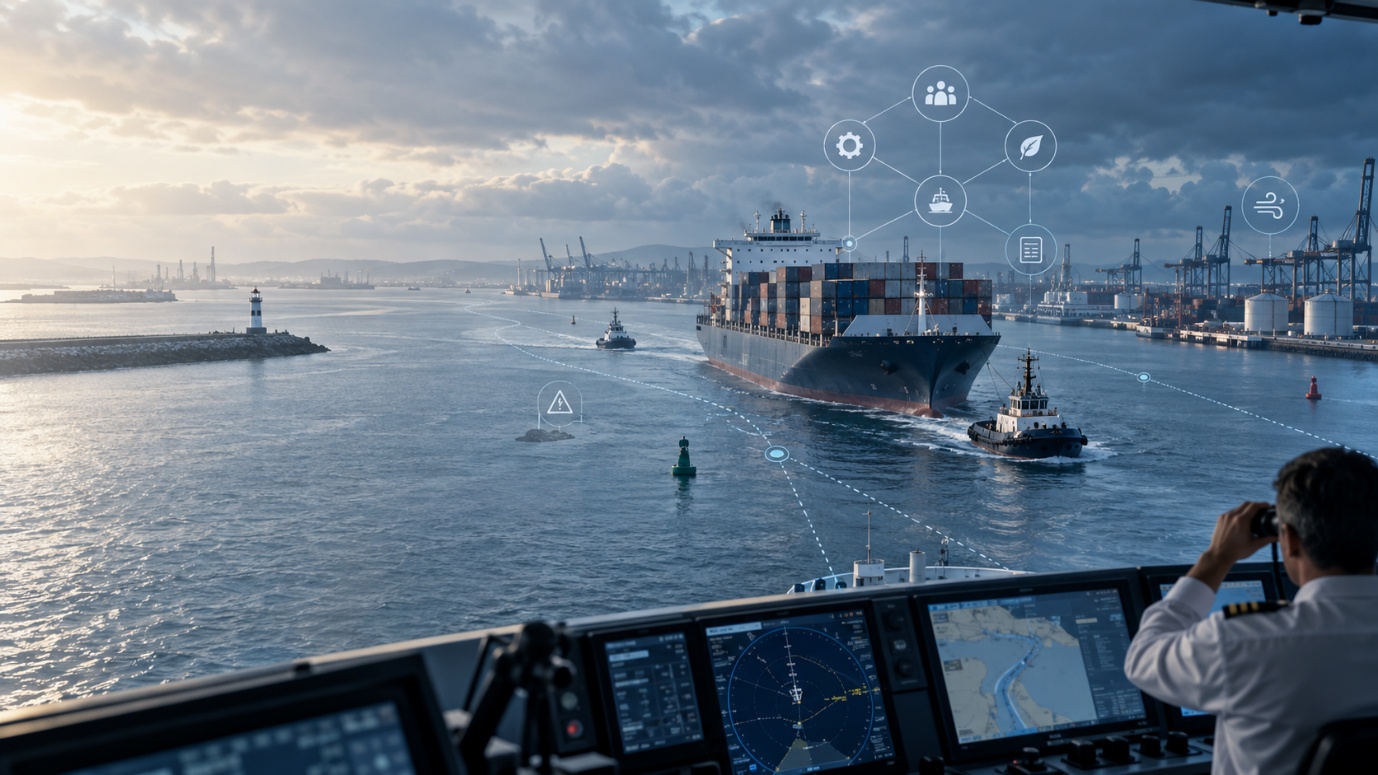
Will it involve an autonomous ship? An ammonia-fuelled vessel? Methanol, batteries or hydrogen? Or perhaps an interaction between several new systems that nobody considered particularly significant on their own?
The question is not which technology will simply “fail first.” Failures, incidents and near misses will occur as technologies mature. The more interesting question is which event becomes the first defining accident—the one that changes how society understands the technology itself.
Ulrich Beck's idea of the risk society is useful here. Modern societies increasingly have to manage risks created by the same technological development intended to produce progress. Technological change can move faster than society's ability to understand and govern some of its unintended consequences.
Shipping is entering that territory now.
In July 2026, IMO's first global MASS Code took effect as a non-mandatory framework for autonomous and remotely operated ships. Methanol already has interim safety provisions, while frameworks for ammonia safety and seafarer training have continued to develop. Regulation and operational experience are therefore evolving at the same time.
But society does not understand risk only through frequency × consequence.
Kasperson's theory of the social amplification of risk explains how the meaning of an accident changes as information passes through investigators, regulators, companies, experts, media and the public. A technically limited event can have consequences far beyond its physical damage when it appears to reveal something new about a technology.
This is sometimes described as an event's signal value. The accident is no longer interpreted as one isolated loss. It becomes evidence of what people believe might happen again. This effect can be particularly strong for unfamiliar technologies, where uncertainty itself influences risk perception.
Public-policy theory adds another dimension. Thomas Birkland describes major accidents and disasters that suddenly concentrate public and political attention as focusing events. Such events can expose weaknesses that existed before the accident and open a window for policy change.
This creates an uncomfortable thought for maritime safety.
The next defining accident may not reveal a hazard that nobody knew about.
Its precursors may already exist somewhere—in HAZIDs, simulations, near-miss reports, operating experience, class requirements, recurring alarms or expert concerns.
What may be missing is not information.
It may be our ability to connect weak signals before an accident connects them for us.
Diane Vaughan's work on the normalisation of deviance offers one explanation. Repeated deviations can gradually become accepted when they do not immediately result in harm. A workaround, recurrent alarm, small leak, unexpected software behaviour or operating condition outside an original assumption may slowly stop looking abnormal.
After an accident, these signals can look obvious.
Before it, they rarely do.
Perhaps that is the real safety challenge of the maritime transition.
Not whether we can guarantee that autonomous ships, ammonia, methanol or other emerging technologies will never experience a serious accident.
We cannot.
The deeper question is whether we can produce the learning normally triggered by a defining accident without first needing the accident itself.
A mature safety system should be capable of creating its own focusing events—before history creates one for us.
Sources and further reading
- Beck, U. Risk Society: Towards a New Modernity. Sage, 1992; first published in German as Risikogesellschaft, 1986. Argues that advanced societies increasingly have to govern risks produced by their own technological development.
- Kasperson, R. E., Renn, O., Slovic, P., Brown, H. S., Emel, J., Goble, R., Kasperson, J. X., and Ratick, S. “The Social Amplification of Risk: A Conceptual Framework.” Risk Analysis, vol. 8, no. 2, 1988, pp. 177–187. Sets out how the signals an event sends through institutions, media and society can amplify or attenuate its consequences well beyond the physical damage.
- Slovic, P. “Perception of Risk.” Science, vol. 236, no. 4799, 1987, pp. 280–285. The source of signal value: the idea that an accident's importance lies partly in what it appears to say about the likelihood of further, possibly larger, events.
- Birkland, T. A. After Disaster: Agenda Setting, Public Policy, and Focusing Events. Georgetown University Press, 1997. Examines how sudden events concentrate attention and open windows for policy change, drawing on oil spills and nuclear accidents among others.
- Vaughan, D. The Challenger Launch Decision: Risky Technology, Culture, and Deviance at NASA. University of Chicago Press, 1996 (enlarged edition 2016). The study from which the normalisation of deviance is drawn: repeated departures from expected conditions became acceptable inside NASA because they had not yet produced a catastrophe.
- International Maritime Organization. IMO adopts first global Code for autonomous ships, 22 May 2026. The non-mandatory MASS Code was adopted by resolution MSC.595(111) and took effect on 1 July 2026; see also IMO's autonomous shipping overview.
- International Maritime Organization. International Convention for the Safety of Life at Sea (SOLAS), 1974. The first version was adopted in 1914 in response to the loss of the Titanic.
- International Maritime Organization. International Convention for the Prevention of Pollution from Ships (MARPOL), and the historic background to IMO's pollution-prevention work, which traces the response that followed the Torrey Canyon.
- International Maritime Organization. Interim Guidelines for the Safety of Ships Using Methyl/Ethyl Alcohol as Fuel, MSC.1/Circ.1621, 7 December 2020.
- The Erika: Bureau d’enquêtes sur les événements de mer, Report of the enquiry into the sinking of the Erika, and ITOPF’s case summary. The European response followed in the Erika I package and the two that followed it, in the course of which EMSA was established.